Trusted Microsoft Dynamics 365 Consulting Service in India: A Complete Guide to Selection, Implementation, and Value Creation

Are you seeking a trusted Microsoft Dynamics 365 consulting service in India? If yes, you are on the right track. Think of a centralized system that helps every team in your organization maintain control, automate tasks, and increase efficiency & productivity. That centralized system is the Microsoft Dynamics 365.
However, we can’t ignore that there are many Dynamics consulting firms in India. Therefore, how can one identify a trusted company for Dynamics 365 consulting services? – Sound familiar? Keep reading this blog to the end and understand everything, from Dynamics 365 consulting partner selection to implementation.
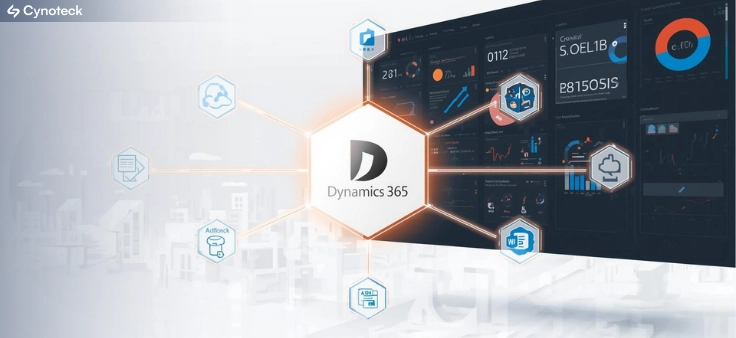
Microsoft Dynamics 365 is a cloud-based suite of intelligent business applications that brings together CRM (Customer Relationship Management) and ERP (Enterprise Resource Planning) in one unified platform. Indian businesses are increasingly adopting it to streamline operations, enhance customer engagement, and remain compliant with local regulations, such as GST. In simple terms, it helps both SMEs and large enterprises scale faster, automate everyday processes, and make better decisions using real-time data.
Microsoft Dynamics 365 is a set of business applications that helps organizations manage sales, customers, finance, operations, and service with ease. Simply put, it allows organizations to replace disparate tools with a single, robust platform that lets all teams work with the same data in real time.
Unified Platform: Dynamics 365 removes data silos by connecting CRM and ERP systems into a single environment. This allows information to flow smoothly across finance, sales, customer service, and operations, creating a shared source of truth.
AI-Enabled Intelligence: The platform includes built-in AI capabilities, such as Copilot, that turn data into actionable insights. This helps teams make informed, real-time decisions instead of relying on guesswork or delayed reports.
Modular and Scalable: Businesses can start with only the applications they need, such as Sales, Finance, or Business Central, and expand over time. This flexible structure supports growth without forcing large upfront investments.
Cloud-First Architecture: Built on Microsoft Azure, Dynamics 365 offers secure, anytime, and anywhere access. This makes it well-suited for remote and hybrid work environments while maintaining enterprise-grade security.
Built-In Compliance for India: Dynamics 365 supports local compliance requirements, including GST, TDS, e-invoicing, and statutory reporting. This simplifies regulatory processes and reduces reliance on manual workarounds.
Cost-Effective Scalability: Its cloud-based model eliminates the need for expensive on-premise infrastructure. With subscription-based pricing, Indian SMEs can control costs while scaling the system as their business grows.
Native Microsoft Ecosystem Integration: The platform integrates seamlessly with Microsoft 365 tools like Excel, Outlook, Teams, and Azure. This improves productivity by allowing employees to work within familiar applications.
Improved Customer Experience (CRM): Organizations use Dynamics 365 to personalize customer journeys, automate onboarding, and deliver faster, more consistent support, leading to stronger customer relationships.
Operational Efficiency (ERP): The ERP capabilities help streamline supply chain processes, inventory management, and financial planning. Leaders gain a complete, real-time view of operations across the organization.
Advanced Analytics with Power BI: Built-in analytics and Power BI dashboards provide interactive insights without the need for separate BI tools. Decision-makers can track performance and trends with minimal effort.
In essence, Microsoft Dynamics 365 functions as a central operating system for modern Indian businesses. It supports digital transformation by improving productivity, ensuring compliance, and enabling agility in a competitive and fast-changing market.
Work with a reliable Microsoft Dynamics 365 implementation and consulting partner in India
Talk to ExpertsAlso Read: Top 10 Microsoft Dynamics 365 Consultants in India
Dynamics 365 consulting projects in India often fall short of the expected Return on Investment (ROI). This mirrors global trends, but the root cause is rarely the software itself. In most cases, failures stem from human decisions, process gaps, and weak implementation strategies.
In India, these challenges are often intensified by aggressive cost-cutting during implementation and fast, unstructured business growth. As a result, companies invest in a powerful platform but fail to unlock its real value.
Below are the most common reasons why Dynamics 365 implementations in India struggle to deliver ROI.
1. Over-Customization Instead of Using Standard Capabilities
One of the most common reasons Dynamics 365 fails to deliver ROI is excessive customization. Instead of using proven platform capabilities, organizations often try to force old habits into a new system, increasing cost and complexity from day one.
Forcing legacy processes: Instead of adopting Dynamics 365 best practices, companies try to replicate outdated workflows. This limits the platform’s strengths and keeps inefficiencies intact.
High technical debt: Excessive custom code increases maintenance costs, slows performance, and makes upgrades difficult. Over time, this directly reduces ROI.
Ignoring built-in features: Dynamics 365 already includes rich, out-of-the-box functionality. Skipping these capabilities in favor of custom development often adds cost without delivering meaningful value.
2. Lack of Clear Strategy and Business Goals
Without a clear strategy, Dynamics 365 becomes just another software tool instead of a business growth platform. Many implementations begin without defined outcomes, making it difficult to measure success or guide decisions.
Technology-first thinking: Projects are often treated as IT upgrades rather than as business transformation initiatives. Without measurable goals, such as reducing order-to-cash time or improving sales conversion, focus is lost.
No clear “why”: When leadership does not communicate why Dynamics 365 is being implemented, teams struggle to align workflows with business priorities. This results in fragmented usage and poor outcomes.
3. Poor Data Migration and Data Quality
Data is the foundation of any CRM or ERP system. When data quality is poor, even a well-configured Dynamics 365 environment fails to gain user trust or deliver reliable insights.
Garbage in, garbage out: Migrating inaccurate, duplicate, or incomplete data from legacy systems breaks reports, disrupts workflows, and erodes user trust in the new platform.
Underestimating migration effort: Data migration is often treated as a simple technical task. In reality, it is a business-critical process that requires planning, validation, and ownership; otherwise, it will lead to delays and cost overruns.
4. Low User Adoption and Weak Change Management
Dynamics 365 only delivers value when employees actively use it. Many implementations fail not because of system limitations, but because people do not adopt new ways of working.
Resistance to change: Employees often prefer familiar tools like spreadsheets and manual processes. Without proper engagement, new systems feel like extra work rather than support.
Inadequate training: When training is shallow or generic, users only adopt a small portion of the system. As a result, most of Dynamics 365’s value remains unused.
5. Choosing the Wrong Implementation Partner
The consulting partner plays a decisive role in the success or failure of a Dynamics 365 project. Poor Dynamics 365 consulting partner selection often leads to weak design decisions that are difficult and costly to fix later.
Cost over capability: To reduce upfront costs, companies often select low-cost partners with insufficient industry or platform expertise. This leads to poor configuration, delays, and rework.
Mismatch in expertise: A partner skilled in Dynamics 365 Finance may not be equally strong in CRM-focused implementations. Misaligned expertise results in weak solutions that fail to meet business needs.
6. Scope Creep and Misaligned Expectations
Uncontrolled scope expansion is a silent killer of CRM projects. Without strong governance, small changes accumulate into major delays and budget overruns.
Uncontrolled scope expansion: Without strong project controls, additional requirements keep getting added. This inflates budgets and pushes timelines far beyond original expectations.
Unrealistic delivery timelines: Rushing to go live often leads teams to skip essential steps such as User Acceptance Testing. The result is a system full of issues that frustrates users from day one.
When Dynamics 365 fails to deliver ROI, the problem is rarely technology. It is almost always the result of a lack of clear strategy, weak execution, poor partner selection, and a lack of focus on people and processes.
Organizations that approach implementation as a structured business transformation, rather than a quick IT rollout, are far more likely to achieve lasting value from Dynamics 365.
Also Read: Top 10 Microsoft Dynamics 365 Consulting Partner in the UAE
Microsoft Dynamics 365 stands apart from traditional CRM and ERP systems by being cloud-native, modular, and built with AI at its core. Instead of relying on rigid, on-premise, or disconnected systems, Dynamics 365 brings CRM and ERP together on a single platform. This allows businesses to pay only for the applications they need, integrate seamlessly with Microsoft 365, and automate workflows using intelligent insights.
Key Differences Between Dynamics 365 and Traditional CRM/ERP Systems
Dynamics 365 delivers a unified, scalable digital foundation. Rather than managing sales in one system and finances in another, businesses operate within a connected environment that supports growth, automation, and smarter decision-making.
1. Modular Architecture: Traditional systems often require large, all-or-nothing implementations. Dynamics 365 allows organizations to start small, such as with Sales or Customer Service, and add ERP modules like Finance or Supply Chain as the business grows.
2. Unified Data and AI-Driven Insights: Dynamics 365 removes the separation between front-office CRM data and back-office ERP data. This unified data model enables AI-powered insights, including demand forecasting, customer behavior prediction, and automated financial processes, using tools such as Power BI and Copilot.
3. Cloud-Native and Flexible: Unlike on-premise systems that demand constant maintenance and upgrades, Dynamics 365 is hosted in the cloud. This reduces IT overhead, supports remote and hybrid work, and delivers regular updates automatically without business disruption.
4. Native Microsoft Ecosystem Integration: Dynamics 365 works seamlessly with familiar Microsoft tools such as Outlook, Excel, Teams, and Microsoft 365. Employees can access and update data directly within the applications they already use, which significantly improves adoption and productivity.
5. Low-Code Customization with Power Platform: Using Power Apps, Power Automate, and Power BI, businesses can extend and customize Dynamics 365 with low-code or no-code tools. This makes the platform far more agile than traditional systems that depend heavily on custom development.
Get expert guidance from certified Dynamics 365 consultants in India
Get Free ConsultationChoosing the right Dynamics 365 consulting partner in India is a business decision, not just a technical one. The right partner shapes how well the system fits your operations, how quickly teams adopt it, and whether you see real ROI after go-live. This is why evaluation must go beyond pricing or basic credentials.
By focusing on the following factors, you can select a Dynamics 365 consulting partner who does more than implement software. The right partner helps drive efficiency, supports growth, and ensures your Dynamics 365 investment delivers long-term business value.
Verify Industry Experience and Practical Expertise: Look for partners with proven experience in your industry, such as manufacturing, retail, or professional services. They should understand your business processes, regulatory needs, and operational challenges, not just the Dynamics 365 interface.
Validate Microsoft Certifications and Partner Status: A Microsoft Solutions Partner designation indicates that the firm meets Microsoft’s standards for delivery quality and platform expertise. While certifications alone are not enough, they provide a strong baseline of credibility.
Evaluate Technical and Integration Capabilities: Assess the partner’s ability to handle real-world complexity. This includes integrating Dynamics 365 with existing CRM systems, ERP platforms, third-party applications, and Power Platform tools without creating performance or maintenance issues.
Review Post-Implementation Support and Governance: A successful implementation does not end at go-live. Confirm the availability of structured support, including SLAs, ticketing processes, ongoing training, and system optimization to support future growth.
Request Relevant Case Studies and Client References: Ask for examples of similar projects within your industry. Case studies should clearly show outcomes, not just features implemented, helping you judge their ability to deliver measurable results.
Assess Communication Style and Cultural Alignment: Clear communication and transparency are critical for long-term success. Ensure the partner’s team works collaboratively, sets realistic expectations, and aligns with your company’s values and working style.
Balance Local Support with Global Standards: Many Indian consulting firms offer a strong local presence combined with global delivery practices. Partners such as Cynoteck Technology Solutions provide accessible local support while following global implementation standards.
Also Read: Top Affordable Microsoft Dynamics 365 Consultants in the USA
Not all Dynamics 365 consulting partners work the same way. Many businesses realize this difference only after the system is already in use. The specialists work with Dynamics 365 as it is designed. General IT vendors often build around it—and that difference shows up later in cost, performance, and stability.
General IT vendors typically support multiple technologies. When they implement Dynamics 365, they often treat it like custom software and start building features early. This adds complexity and makes the system harder to manage over time.
Dynamics 365 specialists work differently. They focus mainly on Dynamics 365. Instead of building everything from scratch, they leverage the platform's existing capabilities and keep the system simple.
Area | General IT Vendor | Platform Specialist |
Approach | Builds custom features early | Uses standard features first |
Customization | High, even when not needed | Limited and purposeful |
Upgrades | Often risky and time-consuming | Smooth and predictable |
Performance | Can slow down over time | Remains stable |
Long-term cost | Increases gradually | More controlled |
In the long run, systems built with heavy customization become more complex to upgrade and more expensive to support. Systems designed by platform specialists remain easier to use, update, and scale.
A successful Dynamics 365 consulting is not about how fast the system goes live. It is about how well the system supports daily work after go-live.
Successful Dynamics 365 implementation best practices focus on business understanding, clear design, user involvement, and proper testing to ensure long-term adoption and value.
Strategic Planning & Flexibility: The initiative begins with detailed requirements discovery and avoids long, rigid 9–18-month waterfall models. Instead, it follows an agile, iterative, value-driven approach that enables teams to adapt quickly as business needs evolve.
Tailored User Experience (UX): Rather than relying on a one-size-fits-all setup, the system is shaped around specific user roles and everyday tasks. This includes simplified forms, focused views, and role-based navigation that make daily work easier.
High User Adoption: Strong change management, continuous training, and regular feedback loops ensure employees genuinely embrace the system. Consistent user engagement is treated as the cornerstone of long-term CRM success.
Data Integrity & Integration: Data migration is carefully planned and validated to maintain accuracy and reliability. Integrations with existing systems are tested independently before going live to prevent disruptions and data inconsistencies.
Automated Workflows: Core business processes are streamlined through automation, reducing manual effort, enabling smoother cross-departmental collaboration, and improving speed, consistency, and accountability.
Active Stakeholder Participation: Business leaders and IT teams work in close alignment throughout the project, with clearly defined roles, responsibilities, and shared ownership of outcomes and objectives.
Future-Ready Design: Customizations follow Microsoft-recommended extension approaches, ensuring the system remains adaptable and can seamlessly adopt future platform updates without rework or disruption.
Also Read: Top 10 Microsoft Dynamics 365 Consulting Partner in the USA
Dynamics 365 can be used across many industries, but its implementation should vary based on each business's operating model. A one-size-fits-all setup usually leads to poor results. Below is how different industries typically use Dynamics 365, along with the areas that require special attention during implementation.
Retail & E-Commerce: Retail and e-commerce businesses need real-time visibility into inventory, orders, and customer data. Dynamics 365 helps keep online and offline channels in sync, ensuring accurate stock levels, pricing, and the customer experience.
IT & Healthcare: IT and healthcare organizations handle sensitive data and structured workflows. Dynamics 365 supports case management, service tracking, and reporting, with a strong focus on data accuracy, access control, and reliability.
Media & Entertainment: Media and entertainment companies manage fast-moving projects, contracts, and billing. Dynamics 365 helps track clients, projects, and revenue while improving coordination between creative and operational teams.
Real Estate: Real estate businesses use Dynamics 365 to manage leads, properties, site visits, and follow-ups. The focus is on pipeline visibility, timely communication, and simple tools that sales teams actually use.
Service Industry: Service-based organizations rely on people, time, and delivery quality. Dynamics 365 supports customer management, project tracking, invoicing, and better visibility into costs and performance.
Utilities: Utilities manage large customer volumes and service requests. Dynamics 365 helps handle customer service, case tracking, and reporting while supporting scalability and operational stability.
Post-implementation is where real ROI from Dynamics 365 is achieved. After go-live, businesses need a structured approach that focuses on proactive support, system performance, and long-term scalability. Without this, even a well-implemented system can lose value over time.
1. Post-Implementation Support: Strong support ensures stability and user confidence. Dedicated support teams should handle issue resolution, user questions, and ongoing training. In addition, proactive maintenance—such as bug fixes, security updates, and system patches—keeps the platform reliable. Clear Service Level Agreements (SLAs) help maintain high availability, especially for customer-facing CRM applications.
2. Performance Optimization: Over time, systems slow down if they are not optimized. Performance improves when unnecessary fields are removed from forms, field dependencies are used correctly, and data is structured efficiently. Optimizing configurations and enabling features such as change tracking reduces latency and improves response time. For supply chain and finance teams, tools such as Planning Optimization help automate planning and enhance operational efficiency.
3. Scalability and Business Growth: Dynamics 365 is cloud-based, which makes scaling easier as the business grows. Companies can add users, data, and modules without investing in new infrastructure. Regular quarterly audits help track KPIs and ROI and identify opportunities for further automation or expansion. Staying current with Microsoft updates ensures the system continues to benefit from new, more scalable features.
4. Best Practices for Long-Term Value: Long-term success depends on continuous change management and user enablement. Ongoing training helps maintain high adoption as processes evolve. Working with a certified Dynamics 365 partner also ensures a smooth transition from project delivery to steady-state operations, keeping the system aligned with business goals over time.
In simple terms, go-live is not the finish line. With the proper support, optimization, and scalability planning, Dynamics 365 continues to deliver value year after year.
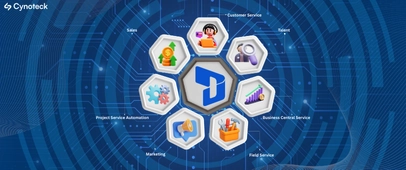
Cynoteck Technology Solutions is a strong mid-sized Microsoft Solutions Partner focused on end-to-end Microsoft Dynamics 365 consulting services. The company supports both CRM and ERP needs, including Dynamics 365 Sales, Customer Service, Field Service, and Business Central.
Cynoteck is a strong fit for SMEs and enterprises seeking practical, scalable, and cost-effective Dynamics 365 consulting services and solutions. Their strength lies in handling complex migrations and integrations and providing reliable post-implementation support that helps businesses grow over time.
Key Areas of Expertise and Strategic Fit:
Dynamics 365 Customization and Consulting: Cynoteck tailors Dynamics 365 CRM and ERP to match real business workflows. Instead of generic setups, solutions are designed around how teams sell, serve customers, and manage operations.
AI-Enabled Dynamics 365 Solutions: The team integrates Microsoft Copilot and built-in AI capabilities to improve productivity, support field operations, and generate better customer insights for faster decision-making.
Power Platform and System Integration: Cynoteck builds custom apps, automates workflows, and integrates Dynamics 365 with existing systems using the Power Platform. This reduces manual work while keeping the system flexible and easy to maintain.
Global Delivery with Local Support: With headquarters in India and offices in the USA and UAE, Cynoteck combines global delivery standards with accessible local support, making it suitable for both domestic and international clients.
Industry-Focused Experience: The company works across multiple industries and brings practical expertise in CRM development, Field Service optimization, and marketing automation, ensuring solutions fit industry-specific needs.
Reliable Long-Term Partner: With strong client retention (90%) and a large portfolio of completed projects (500+), Cynoteck is known for stable implementations and long-term support rather than short-term project delivery.
Work with a trusted and affordable Microsoft Dynamics 365 partner in India
Start Your ProjectA: The cost depends on the number of users, selected modules, data migration needs, integrations, and customization. Small projects cost less, while mid-sized and complex implementations require higher investment. A clear scope keeps costs under control.
A: Timelines vary by scope. Simple implementations may take a few months. Mid-sized projects usually take four to six months. Larger, multi-module setups take longer due to planning, testing, and training.
A: Customization should be limited. Most business needs can be handled using standard Dynamics 365 features. Custom work should be added only when there is a clear business gap that cannot be solved otherwise.
A: Look at how well the Dynamics 365 consulting partner understands your business, explains solutions in simple terms, manages customization, and plans for long-term use. Price alone should not be the deciding factor.
A: Yes. Dynamics 365 is designed to scale. You can add users, modules, and capabilities as your business expands, provided the system is designed for growth.
A: Post-go-live support includes user assistance, system monitoring, updates, and minor enhancements. Ongoing support helps maintain performance and ensures the system continues to meet business needs.
Microsoft Dynamics 365 can deliver strong business value when implemented with the right approach and the right partner. The software itself is capable, but success depends on planning, simplicity, and user adoption.
Before committing budget or selecting a vendor for Microsoft Dynamics 365 consulting services, it is essential to understand your business needs, expected outcomes, and long-term goals. Taking time to get clarity early helps avoid costly changes later.
If you are evaluating Dynamics 365 or unsure whether your current setup is delivering enough value, consulting an experienced Dynamics 365 expert can help you make informed decisions and move forward with confidence.
.webp)
Explore the top Microsoft Dynamics 365 consulting companies in 2026. Compare expertise, services, and ROI to find the best partner for your digital transformation.
We are more than just developers and consultants—we are your partners in navigating the digital landscape. Let us be the engine behind your next big success while you focus on your core vision.
Explore Opportunities!