Can Data Centers Really Work in Space? What the FCC Approved
TL;DR
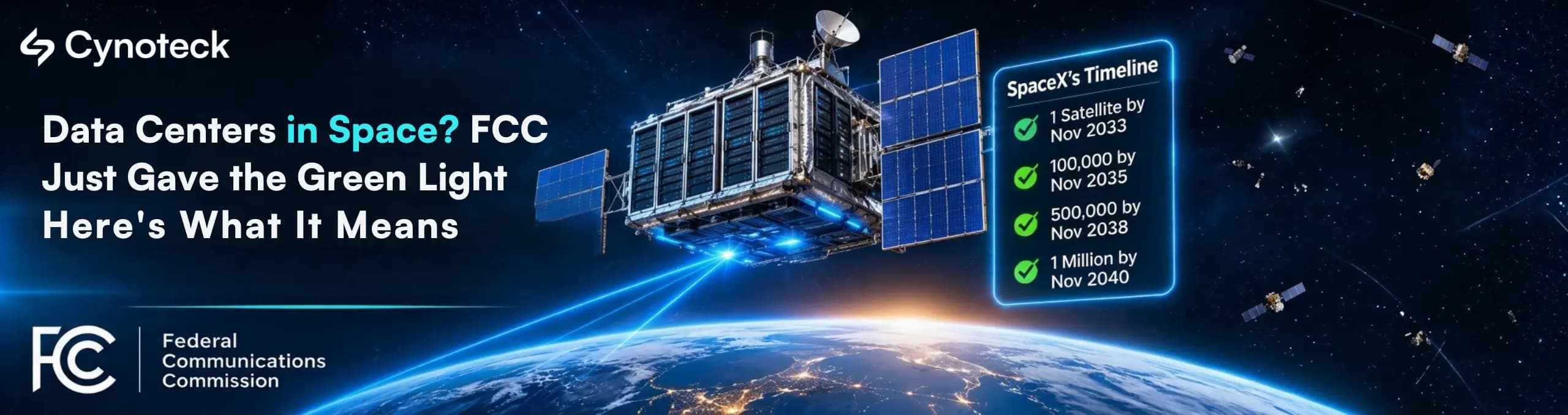
This is a permission slip with deadlines, not a launch schedule. SpaceX must place at least one satellite in orbit by November 2033, reach 100,000 by November 2035, 500,000 by November 2038, and all 1 million by November 2040, according to coverage of the authorization. The satellites would fly at about 500 to 1,002 kilometers, communicating mainly by laser links with other satellites, including Starlink. FCC Chairman Brendan Carr said the action "opens a bold new frontier" for AI computing infrastructure. SpaceX still faces technical and financial hurdles, including cooling chips in space, launch and manufacturing costs, and financing the chips.
- The FCC's release uses the term "super intelligence," in line with recent executive-branch wording.
- The FCC says it is reviewing other companies' orbital data center proposals and plans to decide on them quickly.
The FCC has approved the idea, not the data centers. On November 25, 2026, the Federal Communications Commission gave SpaceX conditional approval to deploy and operate up to 1 million satellites it calls "Starmind," a constellation of orbital computing modules meant to run AI workloads. The FCC calls it the first authorization in US history for data centers in space. But SpaceX has seven years to get its first operational satellite into orbit and 14 years to finish, and the FCC has not yet approved its plan for handling orbital debris above 600 kilometers. Amazon, Viasat, and the American Astronomical Society objected.
What Exactly Did the FCC Approve?
Here are the key facts from the FCC's release and TechCrunch's reporting on the authorization:
Item | Detail |
|---|---|
Who | SpaceX (Space Exploration Holdings) |
What | "Starmind" constellation of up to 1 million orbital compute modules |
Type of approval | Conditional |
Altitude | About 500 to 1,002 kilometers |
Primary links | Lasers between satellites, including Starlink |
Backup control | Radio links in the 18.8 to 19.3 GHz and 28.6 to 29.1 GHz bands |
First satellite | By November 2033 (seven years) |
100,000 satellites | By November 2035 |
500,000 satellites | By November 2038 |
All 1 million | By November 2040 (14 years) |
Not yet approved | Debris plan for satellites above 600 km |
Why Does SpaceX Want Data Centers in Orbit?
For solar power and room to grow, according to SpaceX. In its filing, as reported by Engadget, SpaceX argued that orbital data centers are the most efficient way to meet rising AI computing demand because they use solar power with little operating and maintenance cost. Carr said Starmind and competing constellations would use solar power to extend America's lead in AI. Those are the company's and the regulator's arguments, and no independent cost analysis appears in the sources reviewed. Musk thanked Carr on X, calling it a "great asset" for America and the world.
Ready To Integrate AI Into Your Business?
We helped organizations choose the right AI platform, integrate, and scale AI solutions that drive real business impact and track measurable results.
Book a Free ConsultationWho Opposed It, and What Did the FCC Say?
Amazon, Viasat, and the American Astronomical Society. They raised concerns about orbital debris and congestion, radio interference, and environmental effects. Amazon, which is building a rival to SpaceX's Starlink, argued in its petition that the application was "a lofty ambition rather than a real plan," while also saying it "risks real harm." The FCC dismissed some opponents' concerns, including potential threats to scientific research, because it determined they fell outside its regulatory authority, TechCrunch reports. The FCC's full authorization document, which this article did not open, has the details.
What Hurdles Remain?
Quite a few. TechCrunch notes this approval does not mean orbital data centers are imminent:
Orbital debris: the FCC has not approved SpaceX's plan for satellites above 600 kilometers, and SpaceX asked for a waiver of the rule that retired satellites below 2,000 km must reenter the atmosphere within five years
Cost: SpaceX must sharply cut the cost of manufacturing and launching satellites
Heat: processors must be cooled in space, where there is no air to carry heat away
Money: SpaceX must also finance the chips destined for orbit
Is This Connected to the AI Power Debate on Earth?
Yes, it is a response to it. AI data centers need huge amounts of electricity, and communities have pushed back on new sites. Orbital computing is one proposed way around local power limits, though the sources reviewed do not say how it would compare in cost or reliability. For related context on SpaceX's AI computing plans, see our earlier SpaceX and Nvidia coverage.
What Does It Mean for AI Buyers and Businesses?
Nothing changes for your AI plans this year. Starmind's first satellite is years away, and the FCC approval is conditional.
Do not plan around orbital compute for the next several years
Keep watching Earth-based capacity, where power, siting, and chip supply set today's limits
Treat the claims as goals, since no independent cost or performance data was published
Our machine learning development and AI services & solutions teams can help you plan AI workloads across clouds, regions and chip types as the infrastructure landscape evolves.
Frequently Asked Questions
Did the FCC approve 1 million SpaceX satellites?
Yes, conditionally. On November 25, 2026, the FCC granted SpaceX conditional authority to deploy up to 1 million "Starmind" orbital compute modules for data centers in space. According to the FCC, it is the first such authorization in US history. SpaceX still needs further approvals, including for its orbital debris plans above 600 kilometers.
What is Starmind?
Starmind is SpaceX's proposed constellation of up to 1 million orbital data center satellites, built to run AI computing in space. The satellites would fly at about 500 to 1,002 kilometers and communicate mainly through lasers, including links to Starlink. The FCC authorized the system on November 25, 2026, subject to conditions and deadlines.
When will the first Starmind satellite launch?
By November 2033 at the latest. SpaceX has seven years to put its first operational satellite into orbit and 14 years, until November 2040, to deploy the full constellation, according to coverage of the authorization. It must reach 100,000 satellites by November 2035 and 500,000 by November 2038. These are deadlines, not announced launch dates.
Who opposed the SpaceX data center plan?
Amazon, Viasat, and the American Astronomical Society opposed the plan. They cited orbital debris and congestion, radio interference, and environmental effects. Amazon called the application "a lofty ambition rather than a real plan." The FCC dismissed some concerns, such as threats to scientific research, as outside its authority.
Why put data centers in space?
SpaceX argues that orbital data centers are the most efficient way to meet rising AI computing demand, using solar power with little operating and maintenance cost. FCC Chairman Brendan Carr said such constellations use solar power to extend America's lead in AI. These are claims by the company and regulator. No independent cost analysis appears in the sources reviewed.
Can data centers actually work in space?
That is unproven at this scale. TechCrunch lists major challenges, including reducing satellite manufacturing and launch costs, cooling processors in space, and financing the chips. The FCC has also not approved SpaceX's debris plan for satellites above 600 kilometers. The approval gives SpaceX permission to try, not proof that it will work.
Will space data centers replace data centers on Earth?
Nothing in the sources says so. The first satellite is years away, and the full build-out runs to 2040. Earth-based data centers remain the source of nearly all AI computing today. The FCC says it is reviewing other companies' orbital data center proposals, so the field may grow. Treat any replacement forecast as speculation.
What does this mean for businesses that use AI?
Nothing changes in the near term. Plan around Earth-based capacity, power, and chip supply, and treat orbital computing as a long-term possibility. Keep options open across cloud providers and regions, and watch for the debris approval, launch milestones, and any independent cost data. This is general guidance, not investment advice.
Explore comprehensive blogs, best practices, and insights from our technology experts.
 Cynoteck Recognized as a Clutch Global Leader for Spring 2024.png)

 Is 1Password Still Safe After the GitHub Breach.webp)
 FCC Approves SpaceX's Orbital AI Data Center Plan.webp)
.png)
Cynoteck Technology Solutions Wins ET Leadership Excellence Award 2025 for Excellence in IT Consulting and Solutions
Cynoteck wins the ET Leadership Excellence Award 2025 for excellence in IT consulting, recognizing its business-focused, scalable, and high-impact technology solutions.
Turning expertise into action for your business.
We are more than just developers and consultants—we are your partners in navigating the digital landscape. Let us be the engine behind your next big success while you focus on your core vision.
Explore Opportunities!