Why Businesses Choose Power BI for Business Intelligence
.png&w=3840&q=75)
In today's digital economy, data has become one of the most valuable assets for organizations. Every customer interaction, sales transaction, marketing campaign, financial report, and operational process generates valuable information.
Organizations across industries are investing heavily in Business Intelligence (BI) platforms to gain visibility into their operations, improve forecasting, identify growth opportunities, and make faster, data-driven decisions. Among the numerous BI platforms available today, Microsoft Power BI has emerged as one of the world's most trusted and widely adopted business intelligence solutions.
Power BI combines powerful analytics, interactive visualizations, artificial intelligence, cloud capabilities, and seamless Microsoft ecosystem integration into a single platform that serves everyone—from executives and business analysts to department managers and frontline employees.
Whether you're a startup looking to understand customer behavior or a global enterprise managing millions of data records, Power BI provides the tools needed to convert complex business data into clear, actionable insights.
In this article, we'll explore why businesses worldwide choose Power BI for business intelligence, the key benefits it delivers, and how the right Power BI consulting partner can maximize your investment.
Microsoft Power BI is Microsoft's leading Business Intelligence (BI) and data analytics platform that helps organizations transform raw data into meaningful, actionable insights. It enables businesses to connect data from multiple sources, prepare and model that data, create interactive visualizations, and share real-time dashboards across teams—empowering faster, data-driven decision-making.
.png)
Introduced by Microsoft in 2015, Power BI has become one of the world's most widely adopted business intelligence platforms. Organizations of all sizes—from startups to Fortune 500 enterprises—use it to monitor key performance indicators (KPIs), uncover trends, forecast business outcomes, and improve operational efficiency. Its intuitive drag-and-drop interface, AI-powered analytics, and seamless integration with the Microsoft ecosystem make it accessible to both business users and technical professionals.
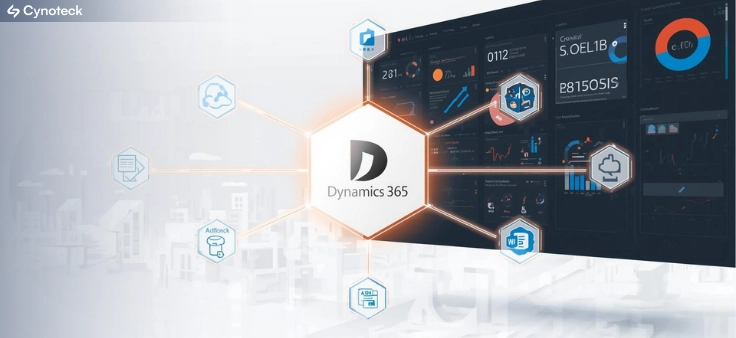
One of Power BI's greatest strengths is its ability to connect to more than 200 data sources, allowing organizations to consolidate information from disparate systems into a single source of truth. Some of the most popular integrations include:
Microsoft Dynamics 365
Salesforce
SAP
Oracle
SQL Server
Microsoft Excel
REST APIs
And hundreds of other cloud-based and on-premises applications
Power BI also incorporates advanced capabilities such as AI-powered insights, natural language queries, predictive analytics, automated data refresh, and mobile-friendly dashboards, enabling users to analyze business performance anytime, anywhere.
Rather than relying on manually compiled spreadsheets and static reports, organizations can automate data collection and reporting, monitor business performance in real time, and make informed decisions based on accurate, up-to-date information. This helps reduce reporting effort, improve collaboration, and create a data-driven culture across the organization.
Also Read: Power BI vs Excel: Which Reporting Tool Is Right for Your Business?
Modern organizations operate in highly competitive markets where decisions must be made quickly and accurately.
Without business intelligence, organizations often struggle with:
Data scattered across multiple systems
Manual reporting processes
Conflicting information between departments
Delayed decision-making
Limited visibility into business performance
Poor forecasting accuracy
Difficulty identifying opportunities and risks
Business Intelligence solves these challenges by providing a centralized, real-time view of organizational data.
Companies using business intelligence are better positioned to:
Improve operational efficiency
Increase profitability
Enhance customer experiences
Reduce costs
Identify market trends earlier
Make evidence-based strategic decisions
Power BI has become one of the preferred platforms for achieving these outcomes.
Also Read: Everything you need to know about Microsoft Power BI
One of the biggest reasons organizations invest in Power BI consulting services is its ability to transform millions of rows of raw data into intuitive, interactive dashboards. Rather than spending hours reviewing spreadsheets or manually compiling reports, decision-makers can view critical business metrics in a single dashboard and drill down into detailed insights with just a few clicks. Power BI's drag-and-drop interface makes analytics accessible to executives, managers, and business users without requiring advanced technical expertise.
Businesses can monitor key metrics such as:
Revenue growth and profitability
Sales pipeline and forecasting
Customer acquisition and retention
Marketing campaign ROI
Financial KPIs and cash flow
Inventory and supply chain performance
According to Microsoft, organizations can connect and visualize data in real time, helping leaders identify trends faster and make informed business decisions. Well-designed Power BI reports reduce reporting complexity and improve visibility across departments.
Modern businesses generate data across multiple applications, making it difficult to gain a unified view of operations. A successful Power BI implementation eliminates these data silos by bringing information from different systems into a centralized reporting platform.
Power BI supports connections to 200+ cloud and on-premises data sources, including:
Microsoft Dynamics 365
Salesforce
SAP
Oracle
SQL Server
Microsoft Excel
Azure
Instead of switching between multiple applications, businesses can consolidate all operational, financial, CRM, ERP, and marketing data into one interactive dashboard. This unified approach improves data accuracy, simplifies reporting, and provides a single source of truth for the organization.
Traditional reports are often outdated by the time they reach management. Power BI enables organizations to monitor business performance using live dashboards that automatically refresh as new data becomes available.
With professionally developed Power BI reports, organizations can track:
Live sales performance
Website traffic and conversions
Inventory levels
Customer service metrics
Manufacturing operations
Financial transactions
Real-time reporting allows executives to respond quickly to changing market conditions, operational issues, or emerging business opportunities instead of relying on static weekly or monthly reports.
Microsoft continues to invest heavily in artificial intelligence across its business applications, and Power BI is no exception. Built-in AI capabilities help organizations move beyond traditional reporting by automatically identifying patterns, anomalies, and trends that may otherwise go unnoticed.
Key AI-powered capabilities include:
Predictive forecasting
Anomaly detection
Key Influencers analysis
Smart Narratives
Natural Language Query (Ask Data)
These intelligent features enable businesses to identify growth opportunities, predict future outcomes, and make proactive decisions based on data rather than assumptions. This is one of the primary reasons many organizations choose Power BI services over traditional reporting tools.
Business leaders cannot afford to wait days for manually prepared reports. With Power BI implementation services, reporting becomes automated, giving stakeholders immediate access to the latest business information.
Power BI enables organizations to:
Automate recurring reports
Access executive dashboards from anywhere
Drill down into detailed business metrics
Share reports securely across teams
Research consistently shows that organizations with strong data-driven decision-making capabilities outperform competitors in productivity and profitability. Power BI empowers teams to make informed decisions quickly, reducing delays caused by manual reporting processes.
For organizations already using Microsoft technologies, Power BI offers unmatched integration capabilities. It works seamlessly with existing Microsoft business applications, reducing implementation complexity and improving user adoption.
Power BI integrates natively with:
Microsoft 365
Microsoft Excel
Microsoft Teams
Dynamics 365
Azure
SharePoint
Power Apps
Power Automate
Microsoft Fabric
This connected ecosystem allows employees to collaborate, share dashboards, automate workflows, and access business intelligence without leaving the applications they use every day. Businesses investing in Power BI consulting services can maximize the value of their existing Microsoft investments.
Protecting business data is a top priority for every organization. Microsoft Power BI includes enterprise-level security features that help businesses safeguard sensitive information while ensuring compliance with industry standards.
Key security capabilities include:
Role-Based Access Control (RBAC)
Row-Level Security (RLS)
Azure Active Directory authentication
Data encryption
Audit logs
Compliance with major global security standards
These capabilities allow organizations to control who can access specific reports and datasets while maintaining data governance across the enterprise.
One of the defining advantages of Power BI is its self-service analytics capability. Rather than relying solely on IT teams to generate reports, business users can create their own dashboards, analyze trends, and answer business questions independently.
With proper Power BI consulting services, organizations can empower employees to:
Build custom reports
Create personalized dashboards
Explore business trends
Filter and analyze data
Share insights securely
This self-service approach significantly reduces reporting bottlenecks while encouraging a data-driven culture throughout the organization.
Compared to many traditional enterprise BI solutions, Power BI provides exceptional value for organizations of all sizes. Its flexible licensing options and cloud-first architecture reduce infrastructure costs while delivering enterprise-grade analytics capabilities.
Businesses benefit from:
Affordable licensing models
Cloud-based deployment
Lower infrastructure investment
Faster implementation
Reduced maintenance costs
Industry analysts consistently recognize Microsoft Power BI as one of the leading business intelligence platforms, offering enterprise functionality at a competitive price point. This makes Power BI services an attractive investment for startups, mid-sized companies, and large enterprises alike.
As organizations grow, their reporting requirements become more complex. Power BI is designed to scale alongside the business, supporting everything from departmental reporting to enterprise-wide analytics initiatives.
Power BI supports:
Large enterprise datasets
Thousands of concurrent users
Advanced AI and predictive analytics
Enterprise governance
Microsoft Fabric integration
Cloud and hybrid deployments
Whether your organization is expanding into new markets, increasing data volumes, or adopting advanced analytics, Power BI provides the flexibility and scalability needed to support long-term business growth. Partnering with an experienced provider of Power BI consulting services ensures your implementation is optimized for both current requirements and future expansion.
One of the biggest advantages of Microsoft Power BI is that it isn't just a reporting tool for executives or data analysts. It is a powerful business intelligence platform that delivers actionable insights to every department, helping teams make faster, data-driven decisions. With customized Power BI reports and dashboards, each department can monitor the metrics that matter most, improve collaboration, and align with organizational goals.
Whether your organization is focused on increasing revenue, optimizing operations, improving customer experiences, or managing workforce performance, Power BI consulting services can help you build department-specific dashboards that provide real-time visibility into business performance.
Sales teams rely on timely and accurate data to achieve revenue targets. Power BI enables sales managers and executives to monitor the entire sales pipeline, identify high-value opportunities, and evaluate team performance through interactive dashboards. By integrating CRM platforms such as Salesforce or Microsoft Dynamics 365, Power BI provides a complete view of the sales cycle.
Key sales insights include:
Revenue and sales performance
Opportunity pipeline
Sales forecasting
Territory and representative performance
Marketing teams generate data from multiple channels, making it difficult to measure campaign success using traditional reports. Power BI consolidates marketing data into a single dashboard, allowing marketers to evaluate campaign performance, understand customer behavior, and optimize marketing spend based on real-time insights.
Common marketing dashboards include:
Campaign ROI
Lead generation and conversion
Website and traffic analytics
Customer acquisition performance
Finance departments require accurate, up-to-date reporting to support budgeting, forecasting, and financial planning. Power BI implementation services help finance teams automate reporting while providing executives with a real-time view of financial health, enabling faster and more confident business decisions.
Finance dashboards typically monitor:
Budget vs. actual performance
Profitability analysis
Cash flow and expenses
Financial forecasts
Operational efficiency directly impacts profitability. Power BI helps operations teams monitor business processes, identify bottlenecks, and optimize resource utilization through centralized dashboards. By integrating ERP and supply chain systems, organizations gain complete visibility into day-to-day operations.
Operational reports commonly include:
Inventory and supply chain performance
Production efficiency
Resource utilization
Vendor performance
Providing exceptional customer experiences requires continuous monitoring of service performance. Power BI enables support teams to track service metrics in real time, helping managers improve response times, maintain service quality, and increase customer satisfaction.
Customer service dashboards typically focus on:
Ticket resolution time
SLA compliance
Customer satisfaction (CSAT)
Agent productivity
Human Resources teams can leverage Power BI services to gain valuable workforce insights and support strategic talent management. HR dashboards simplify employee reporting and help leaders make informed decisions regarding recruitment, retention, and workforce planning.
HR analytics commonly include:
Employee performance
Workforce and attrition analysis
Recruitment metrics
Training effectiveness
Instead of maintaining separate reporting tools for different departments, Power BI provides a unified platform where every team can access secure, role-based dashboards tailored to their specific business objectives. This not only improves collaboration and reporting accuracy but also creates a consistent, organization-wide view of performance.
With the right Power BI consulting services, businesses can develop customized dashboards for every department, ensuring stakeholders at every level have access to the insights they need to make faster, smarter, and more strategic decisions.
Data-driven decision-making has become a competitive necessity across every industry. Whether it's improving operational efficiency, enhancing customer experiences, optimizing financial performance, or forecasting future demand, organizations are increasingly relying on Microsoft Power BI to turn business data into actionable insights.
Through tailored Power BI consulting services, businesses can integrate data from multiple systems, automate reporting, and create industry-specific dashboards that provide real-time visibility into key performance indicators (KPIs). The flexibility of Power BI implementation makes it suitable for organizations of all sizes, from growing businesses to large enterprises.
Healthcare
Manufacturing
Retail and E-commerce
Financial Services and Insurance
Real Estate and Construction
Logistics and Supply Chain
Education
Government and Public Sector
Hospitality, Professional Services, Energy, and Technology
Organizations implementing Power BI often experience improvements such as:
Faster reporting cycles
Improved data accuracy
Better executive visibility
Increased operational efficiency
Reduced manual reporting effort
Enhanced collaboration
Better forecasting
More informed strategic planning
Improved customer insights
Greater return on data investments
The exact results vary by organization, but Power BI consistently helps reduce the time spent preparing reports and increases the time available for analyzing and acting on insights.
Businesses use Power BI for numerous analytics initiatives, including:
Executive dashboards
Financial reporting
Sales analytics
Customer analytics
Supply chain reporting
Inventory management
HR analytics
Manufacturing dashboards
Healthcare reporting
CRM analytics
ERP reporting
Project management dashboards
Marketing performance analysis
Predictive analytics
KPI monitoring
As organizations grow, the volume and complexity of their data increase significantly. Sales data may reside in a CRM, financial information in an ERP system, marketing metrics in analytics platforms, and operational data across multiple business applications. Without a centralized business intelligence platform, teams often rely on spreadsheets, manually generated reports, and disconnected data sources to make critical decisions.
This fragmented approach not only consumes valuable time but also increases the risk of errors, inconsistent reporting, and delayed decision-making. According to industry research, knowledge workers spend a significant portion of their time searching for, validating, and preparing data instead of analyzing it. As businesses become more data-driven, these inefficiencies can directly impact productivity, profitability, and customer satisfaction.
Implementing Power BI consulting services helps organizations overcome these challenges by creating a single source of truth, automating reporting processes, and delivering real-time insights through interactive Power BI reports and dashboards.
Business data is often spread across CRM, ERP, finance, HR, marketing, and operational applications. Without proper integration, departments work with isolated datasets, making it difficult to obtain a complete view of business performance.
Many organizations still spend hours—or even days—collecting data from multiple spreadsheets, exporting reports, and manually preparing presentations. This repetitive work delays decision-making and reduces employee productivity.
When different departments use separate spreadsheets or reporting methods, the same KPI may produce different results. These inconsistencies reduce confidence in the data and make strategic planning more difficult.
Static reports quickly become obsolete. By the time manually generated reports reach executives, the underlying data may have already changed, limiting the ability to respond quickly to new opportunities or operational issues.
Without centralized dashboards, business leaders often lack real-time visibility into critical metrics such as sales performance, inventory levels, financial health, customer satisfaction, or operational efficiency.
When employees spend excessive time gathering, validating, and reconciling data, important business decisions are delayed. In today's competitive environment, slow access to insights can mean missed opportunities and slower responses to market changes.
Disconnected reporting systems make it difficult for teams to work from the same data. Sales, finance, marketing, and operations may each rely on different reports, creating communication gaps and conflicting business insights.
As organizations grow, spreadsheet-based reporting becomes increasingly difficult to manage. Large datasets, multiple business units, and expanding reporting requirements often exceed the capabilities of manual reporting processes.
Managing sensitive business data through spreadsheets or email attachments increases the risk of unauthorized access, version control issues, and compliance challenges. Organizations also struggle to control who can view or edit business-critical information.
A well-planned Power BI implementation addresses these issues by providing a centralized, secure, and scalable business intelligence platform. Instead of relying on disconnected spreadsheets, Power BI automatically collects data from multiple business systems, transforms it into meaningful insights, and presents it through interactive dashboards that update in real time.
With expert Power BI consulting services, organizations can:
Connect data from 200+ business applications into a single reporting platform.
Automate repetitive reporting tasks and reduce manual effort.
Create a single source of truth for consistent, accurate reporting.
Monitor KPIs through real-time, interactive Power BI reports.
Improve collaboration with secure, role-based dashboards.
Strengthen data governance using enterprise-grade security and access controls.
Scale analytics as business needs evolve without replacing existing reporting infrastructure.
By replacing manual reporting with intelligent analytics, businesses can reduce reporting time, improve data accuracy, accelerate decision-making, and build a culture where every strategic decision is backed by trusted, real-time data.
Business intelligence is evolving rapidly.
Organizations are increasingly combining traditional reporting with:
Artificial Intelligence
Machine Learning
Predictive Analytics
Natural Language Queries
Automated Data Preparation
Intelligent Forecasting
Power BI continues to expand its AI capabilities, enabling organizations to move beyond descriptive reporting toward predictive and prescriptive analytics.
This allows businesses to anticipate trends, identify risks earlier, and make more proactive decisions.
Implementing Power BI involves more than creating attractive dashboards.
Successful deployments require:
Business requirements analysis
Data architecture planning
Data modeling
ETL development
Dashboard design
Performance optimization
Security configuration
Governance policies
User training
Ongoing support
An experienced Power BI consulting partner helps organizations avoid common implementation challenges while ensuring the solution aligns with business objectives.
Power BI delivers exceptional value, but unlocking its full potential requires the right expertise. That's where Cynoteck comes in.
Cynoteck is a trusted Power BI consulting company that helps organizations transform their data into meaningful business intelligence through end-to-end Power BI consulting services. With deep expertise in Microsoft technologies, data analytics, CRM, ERP, and cloud solutions, our consultants design scalable BI solutions tailored to your unique business needs.
Our Power BI consulting services include:
Power BI strategy and roadmap development
Data integration from multiple business systems
Data modeling and transformation
Interactive dashboard and report development
Executive KPI dashboards
Power BI migration and modernization
Microsoft Fabric and Azure analytics integration
Power BI performance optimization
Row-Level Security (RLS) implementation
Embedded analytics
Power BI governance and administration
User training and ongoing support
Whether you're starting your business intelligence journey or enhancing an existing Power BI environment, Cynoteck helps you build secure, scalable, and insight-driven analytics solutions that empower faster, smarter business decisions.
Partner with Cynoteck to unlock the true value of your data and turn business intelligence into a competitive advantage.
Empower your teams with interactive dashboards, AI-powered analytics, and real-time reporting. Whether you're starting from scratch or optimizing an existing BI environment, Cynoteck delivers end-to-end Power BI implementation services tailored to your business goals.
Book a Free Consultation
Discover the top 10 benefits of custom CRM software development for modern businesses. Learn how tailored CRM solutions improve efficiency, enhance customer relationships, and drive business growth.
We are more than just developers and consultants—we are your partners in navigating the digital landscape. Let us be the engine behind your next big success while you focus on your core vision.
Explore Opportunities! Power BI vs Excel (1).webp)
.png)