Who Is Spending $1.2 Million to Fight AI-Backed Candidates?
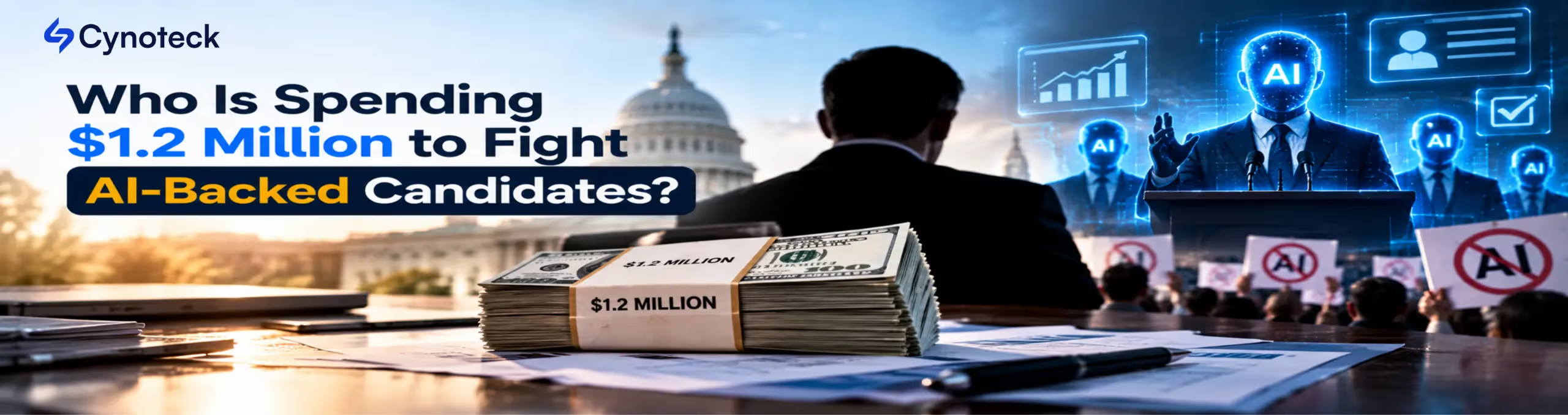
Guardrails Alliance, a super PAC that advocates for stronger AI rules, announced on October 7 that it will spend $1.2 million on digital, YouTube, and streaming TV ads against candidates backed by Leading the Future, the pro-AI industry super PAC. It is targeting two Republicans and one Democrat in competitive districts. The group is demanding "independent, transparent government oversight with real enforcement power" and says AI models should not make final decisions on health care, firing workers, or weapons.
AI policy is now a campaign ad topic. A super PAC called Guardrails Alliance says it will spend $1.2 million against three House candidates backed by the AI industry, its first spending in the general election. It is a small sum next to the industry money on the other side, but it marks a shift: the fight over how to regulate AI is moving from hearings to ballots.
A young group built by Democratic organizers with tech-worker support. Two Democratic operatives formed it in June as a counterweight to Leading the Future. Its website lists union members, AI safety researchers, and progressives as backers, and it says it has support from current and former OpenAI employees and a former Andreessen Horowitz partner. It is the political arm of a wider effort: its nonprofit sibling, Guardrails Action, led a coalition of nearly 40 organizations this week in laying out principles for AI legislation. As of the end of June, the super PAC reported nearly $400,000 in cash on hand, according to Axios.
Three demands, aimed at both parties. According to Axios and Fox News, the alliance says candidates should back:
Independent, transparent oversight of AI with real enforcement power
A mandate that addresses human impacts, from safety to economic disruption
A bar on AI making final decisions such as denying health care or benefits, firing or disciplining workers, or deploying weapons
The second and third demands echo recent state action. California just signed the No Robo Bosses Act, which bars employers from relying solely on AI to fire or discipline workers, and earlier signed Adam's Law on chatbots and children.
We helped organizations choose the right AI platform, integrate, and scale AI solutions that drive real business impact and track measurable results.
Book a Free ConsultationA far larger pro-industry network. Leading the Future is described by Axios as a pro-AI industry super PAC pushing for rapid development and lighter regulation. Axios's February reporting lists donors including OpenAI's Greg Brockman, investor Joe Lonsdale, Andreessen Horowitz, and Perplexity. The group says it supports federal regulation, while Guardrails Alliance criticizes it for taking money from AI industry figures. The money gap is wide: at the end of June, Leading the Future held about $31 million in cash, against Guardrails Alliance's roughly $400,000.
Industry money is not all on one side. Anthropic pledged $20 million in February to back candidates who favor AI safety, an effort reporting ties to Public First Action. With several groups in play, it is worth checking who funds whom.
It tests whether AI is a voting issue. Axios reported in July that candidates were not clearly winning or losing on AI alone. Paid ads that name candidates over AI industry support are a way of forcing the question into public view. Coverage reviewed here does not include responses from the three targeted candidates.
Expect AI regulation to be shaped by the election, not just by agencies.
Watch the midterm results, since both parties are being pushed to take positions on AI oversight
Prepare for rules on automated decisions, an area where states have already acted
Document where AI influences hiring, firing or benefits decisions in your own operations
Our AI services team can help you map where AI touches decisions about people and prepare for oversight rules.
The Guardrails Alliance is a super PAC that advocates for stronger AI regulation and spends money in U.S. elections. Two Democratic operatives formed it in June 2026 as a counterweight to the pro-AI industry group Leading the Future. Its website lists union members, AI safety researchers, and progressives as backers, and it says current and former OpenAI employees support it. At the end of June, it reported nearly $400,000 in cash on hand.
The Guardrails Alliance announced on October 7, 2026, that it will spend $1.2 million on ads against three House candidates backed by Leading the Future: Republicans Aaron Flint (Montana's 1st District) and Jay Feely (Arizona's 1st District), and Democratic Rep. Jimmy Gomez (California's 34th District). These are its first general-election ad buys, running on digital, YouTube, and streaming TV.
Leading the Future is a pro-AI industry super PAC that Axios describes as pushing for rapid AI development and lighter regulation, although the group says it supports federal regulation. Axios reports it has raised more than $140 million. Axios's February reporting listed donors including OpenAI's Greg Brockman, investor Joe Lonsdale, Andreessen Horowitz and Perplexity. At the end of June, it held about $31 million in cash.
The group wants independent, transparent government oversight of AI with real enforcement power, a mandate that addresses human impacts from safety to economic disruption, and a rule that AI models do not make final decisions such as denying health care or benefits, firing or disciplining workers, or deploying weapons. It says it will target candidates from both parties who do not meet these demands.
Democratic organizers founded the Guardrails Alliance, but it targets candidates from both parties. Its first general-election spending goes against two Republicans and one Democrat, all backed by Leading the Future. Its nonprofit sibling, Guardrails Action, led a coalition of nearly 40 organizations this week in outlining principles for AI legislation, according to The Hill.
Yes. Beyond Leading the Future and the Guardrails Alliance, Axios reported in February that Meta put $45 million into a bipartisan PAC to fight state AI bills. Anthropic pledged $20 million in February to back candidates who favor AI safety, an effort reporting ties to Public First Action. Several groups with different funders are active, so check who is paying for any given ad.
No. The announcement is a campaign-spending plan, not legislation. It aims to influence which candidates win and, therefore, what AI rules Congress and states pass later. States have already acted on their own: California signed the No Robo Bosses Act on September 30, 2026, which bars employers from relying solely on AI to fire or discipline workers.
Midterm results could shape whether Congress moves toward binding AI oversight or lighter rules, and states are likely to keep legislating in the meantime. Businesses that use AI in hiring, firing, benefits, or customer decisions should document where automated systems influence outcomes, since candidates in both parties are being pushed to state positions on AI oversight.
.png)
Cynoteck wins the ET Leadership Excellence Award 2025 for excellence in IT consulting, recognizing its business-focused, scalable, and high-impact technology solutions.
We are more than just developers and consultants—we are your partners in navigating the digital landscape. Let us be the engine behind your next big success while you focus on your core vision.
Explore Opportunities! Cynoteck Recognized as a Clutch Global Leader for Spring 2024.png)
 Which AI Model Is Best Right Now, According to the Latest Leaderboards.webp)