Is AI Really Behind the Rise in US Layoffs?
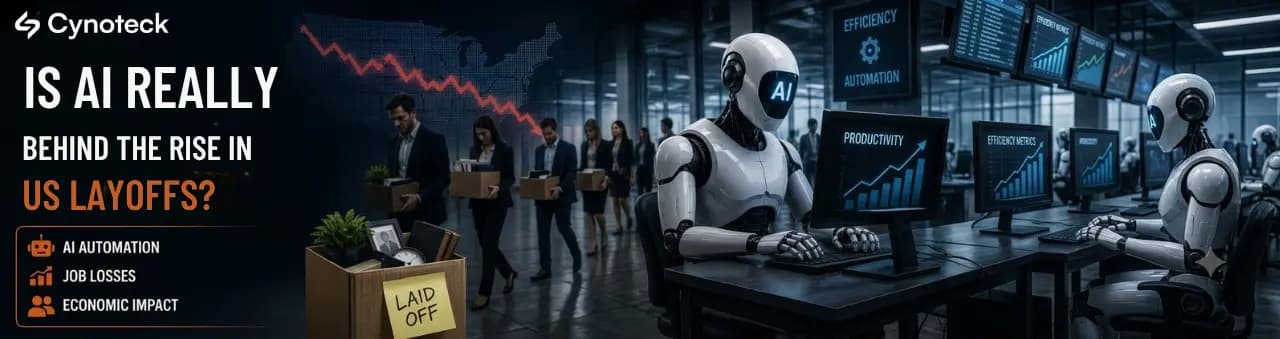
More than half of 2026 layoffs now cite AI or automation, but economists and even OpenAI's CEO question whether AI is the real reason.
Companies are citing AI as a factor in layoffs at a rate never seen before. According to Layoffs.fyi, reported by IBTimes UK on August 26, 2026, 54 percent of 2026 layoff events have named AI, automation, or machine learning as a contributing cause. More than 170,000 workers have been affected so far this year. In 2025, that figure sat below 8 percent.
The tech sector has absorbed the brunt of it. More than 165,000 tech roles were eliminated in the first seven months of 2026 alone.
Different trackers report slightly different figures, since each uses its own methodology. Challenger, Gray & Christmas, cited separately by CBS News, found AI accounted for 26 percent of April's job cuts specifically, with "market and economic conditions" still the most common reason cited across the year overall. The same firm puts total tech job losses since 2020 at roughly 900,000, with 143,000 of those in 2026 and a projected 370,000 by year-end.
The list of companies citing AI spans nearly every corner of tech:
Oracle disclosed in a regulatory filing that AI adoption has directly resulted in workforce reductions.
Amazon, Meta, and Microsoft have all cited AI or automation in recent cuts, even during quarters of strong revenue.
Snap said AI now handles a majority of its code, reducing the need for some engineering roles.
Apple joined the list too, cutting Siri and Vision Pro staff just before a CEO transition, as it leaned on Google's Gemini to rebuild its own AI assistant.
We helped organizations choose the right AI platform, integrate, and scale AI solutions that drive real business impact and track measurable results.
Book a Free ConsultationHere's where the story gets more complicated. Several independent analyses have found little hard evidence that AI is actually driving the productivity gains these layoffs imply.
Gartner studied the connection directly and found no meaningful link between AI-cited layoffs and improved financial returns. Oxford Economics reached a similar conclusion in January, reporting that firms "don't appear to be replacing workers with AI on a significant scale."
Even OpenAI's own CEO Sam Altman has used a specific term for this pattern: "AI washing." Cognizant's chief AI officer told Nikkei Asia he can't confirm whether AI-cited cuts reflect real productivity gains. He noted that AI sometimes becomes a convenient explanation when a company simply overhired.
The financial markets seem skeptical too. A Financial Times analysis found companies citing AI as a layoff factor have underperformed the Nasdaq by nearly 10 percent in the 30 trading days following their announcements.
The companies doing the most cutting are often the same ones spending the most on AI. Alphabet, Microsoft, Meta, and Amazon are on track to spend nearly $700 billion combined on AI infrastructure in 2026, while simultaneously citing AI in tens of thousands of layoffs.
That tension runs through the broader AI jobs debate right now. Bill Gates recently proposed reserving certain jobs exclusively for humans, a stance covered in Cynoteck's report on his "Human Reserved" jobs concept, arguing AI's impact on employment deserves real policy attention. Meanwhile, frontier AI labs are hiring aggressively during the same period, absorbing some of the very talent being cut elsewhere.
Whether AI is the real cause or a convenient explanation, the label itself now carries weight in how a layoff gets received publicly. Businesses considering workforce reductions tied to AI adoption should be prepared for that framing to face real scrutiny, from analysts, employees, and the market itself.
The more useful question for any leadership team isn't whether to mention AI. It's whether the underlying business case actually holds up under the kind of examination this data is now getting. Getting an honest read on that before making a workforce decision is exactly what AI services and solutions built around real impact assessment are for.
54 percent of 2026 layoff events have cited AI or automation, up from under 8 percent in 2025.
More than 170,000 workers have been affected by AI-cited layoffs this year.
Gartner and Oxford Economics both found little evidence that AI-cited layoffs reflect real productivity gains.
Companies citing AI in layoffs have underperformed the Nasdaq by nearly 10 percent afterward, per Financial Times data.
The same companies citing AI in layoffs are collectively spending nearly $700 billion on AI infrastructure this year.
Expect this skepticism to keep growing as more companies report earnings alongside AI-linked layoffs. Businesses citing AI as a reason for workforce cuts should expect that explanation to be tested against actual financial results, not accepted at face value.
.png)
Cynoteck wins the ET Leadership Excellence Award 2025 for excellence in IT consulting, recognizing its business-focused, scalable, and high-impact technology solutions.
We are more than just developers and consultants—we are your partners in navigating the digital landscape. Let us be the engine behind your next big success while you focus on your core vision.
Explore Opportunities! Cynoteck Recognized as a Clutch Global Leader for Spring 2024.png)


 Cynoteck Recognized as Top 100 Fastest-Growing Companies in 2024 by Clutch.png)