Your Android App Just Went Public on Rival App Stores
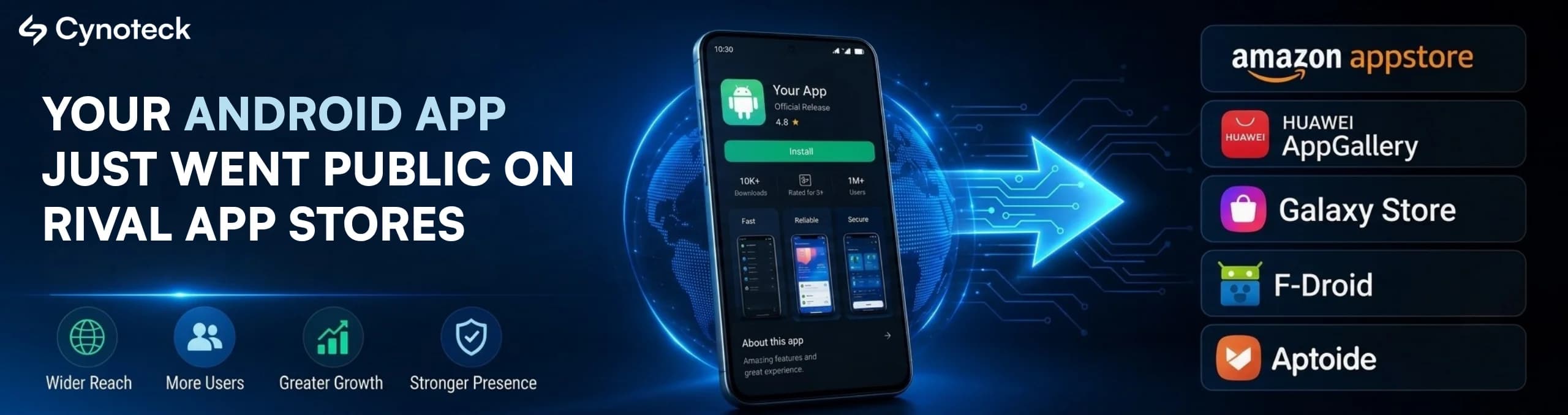
Starting today, July 22, 2026, Google Play is opening its app catalog to third-party Android app stores in the US. Rival storefronts can now access the names, icons, descriptions, screenshots, and metadata of apps listed on Google Play, and offer them to their own users.
This is not a voluntary product update. It is a court-ordered remedy from Google's long-running antitrust fight with Epic Games.
A December 2023 jury found that Google's control over Android app distribution broke federal and California antitrust law. The Ninth Circuit upheld that verdict on July 31, 2025. Judge James Donato's injunction ordered Google to give rival app stores access to the Play catalog and banned exclusive distribution deals.
Google and Epic tried to soften those terms with a settlement in March 2026 that converted the US injunction into a global agreement running through 2032. On July 16, 2026, both companies withdrew that joint motion, leaving Google bound by the original, fuller remedies starting today. It is a reminder that platform owners increasingly answer to courts on release terms, not just product roadmaps, a pattern Cynoteck also tracked in its coverage of GPT-5.6 clearing US government review before its public launch.
We helped organizations choose the right AI platform, integrate, and scale AI solutions that drive real business impact and track measurable results.
Book a Free ConsultationGoogle notified developers on June 22, 2026, that app listings would be shared with third-party stores unless developers chose otherwise. In the Play Console, under Settings and Catalog Settings, they have three options:
Publish all app listings to every participating third-party store.
Manage each third-party store individually.
Block all third-party stores from accessing listings.
Developers who took no action are opted in by default as of today. Downloads still route through Google Play, and Google's standard service fee still applies, even when a user finds the app through a rival store.
Third-party stores joining the new Play Catalog Access Program must meet real conditions before they can list anyone's app:
The store must be available and specifically target US users.
It must function as an open marketplace, accepting any eligible developer.
It cannot cherry-pick exclusives or curate around preferred partners.
That last rule matters more than it looks. A store that can't offer exclusives has to compete on interface and discovery instead, while Google still processes every transaction underneath. Epic Games Store and Aptoide are the most likely early candidates, though neither has confirmed a same-day listing. Platform control is a live fight well beyond Android too, as Cynoteck covered in its report on Apple's lawsuit against OpenAI over its first hardware device, another case of a platform owner drawing hard lines around ecosystem access.
In practice, this changes where your app can be found, not how it gets paid for. Your listing may now show up inside a competitor's storefront with no extra work on your part, and no change to the fees you already pay Google. Businesses are already used to reaching customers through platforms they don't fully control, a shift Cynoteck explored in its coverage of Salesforce's Agentforce Commerce agents selling products directly inside ChatGPT and Google Search.
Businesses running Android apps should check their Catalog Settings today if they have a preference here. Teams with sensitive branding, exclusivity agreements, or private beta listings should decide deliberately rather than let the default setting decide for them.
Google Play's catalog opened to third-party US Android stores on July 22, 2026, under a court order.
Developers who didn't choose a preference by today are opted in by default.
Downloads still go through Google Play, and Google's usual fees still apply.
Rival stores must operate as open marketplaces and cannot offer exclusives.
Epic Games Store and Aptoide are early candidates, but no store has confirmed a day-one listing.
The real test now is adoption. A rival store only becomes useful once its catalog is full, and only worth a developer's attention once real users show up. Businesses with Android apps should watch which stores actually launch inside Google Play before deciding whether this changes their distribution strategy.
.png)
Cynoteck wins the ET Leadership Excellence Award 2025 for excellence in IT consulting, recognizing its business-focused, scalable, and high-impact technology solutions.
We are more than just developers and consultants—we are your partners in navigating the digital landscape. Let us be the engine behind your next big success while you focus on your core vision.
Explore Opportunities! Cynoteck Recognized as a Clutch Global Leader for Spring 2024.png)


 Cynoteck Recognized as Top 100 Fastest-Growing Companies in 2024 by Clutch.png)